
Starting boxing can be exciting but also overwhelming due to the many skills involved. For beginners, mastering fundamental techniques is the best way to build a strong foundation.
These essential boxing techniques improve your performance, keep you safe, and make your training more enjoyable. This article covers the core skills every beginner should focus on.
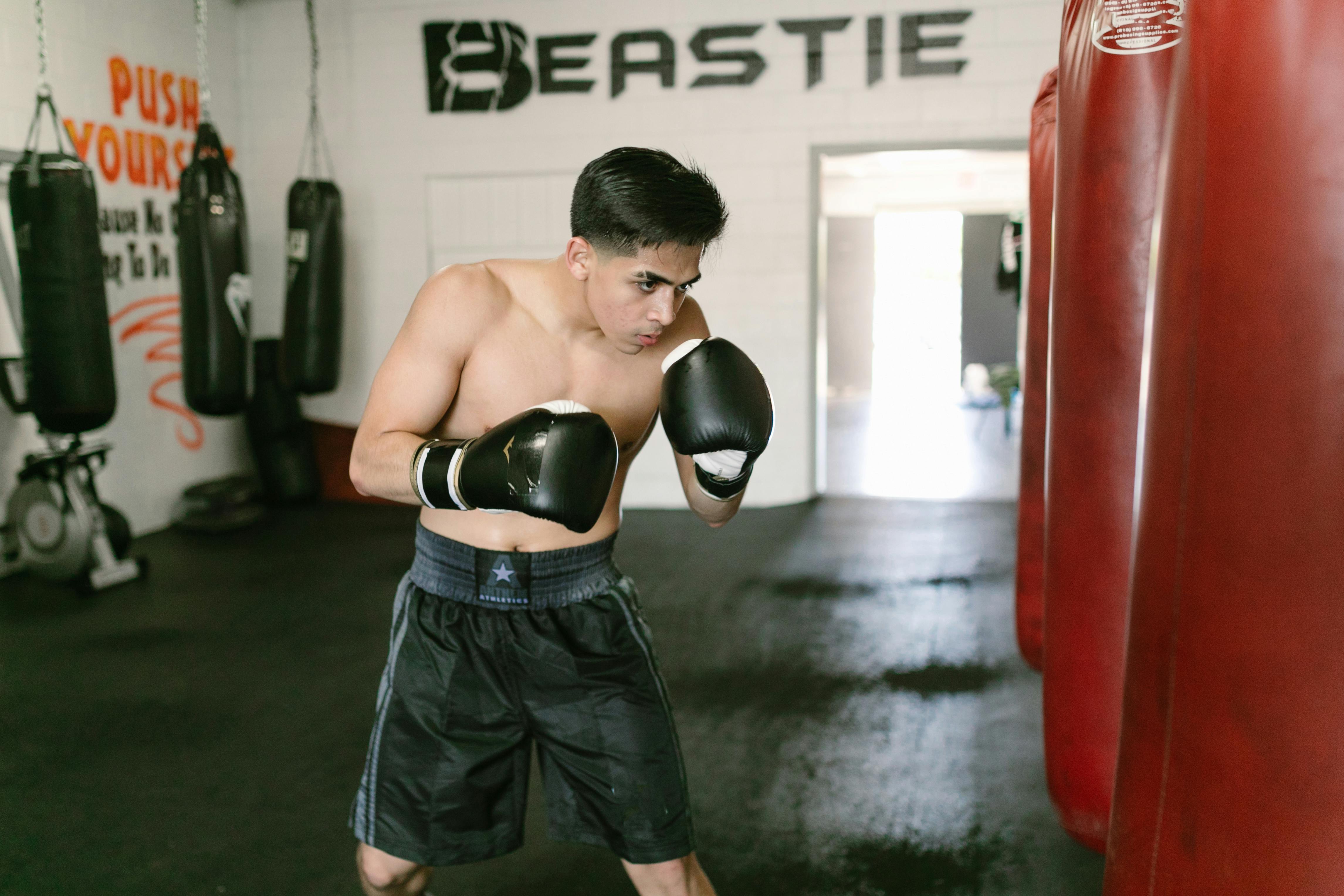
If you want further tips and guidance, check over at this website for more boxing resources.
Understanding the Basics: Boxing Stance and Footwork
Before throwing punches, every beginner must learn the correct stance and footwork. These are the pillars of boxing technique.
The Boxing Stance
- Stand with your feet about shoulder-width apart for a stable base.
- Position your lead foot forward, pointing straight ahead, with your rear foot at a 45-degree angle.
- Keep your weight balanced mostly on the balls of your feet, allowing quick movement.
- Bend your knees slightly to stay light and ready.
- Hold your hands up near your face, elbows tucked in to protect your ribs.
- Keep your chin slightly down and eyes focused forward.
The stance is your foundation. It allows you to throw punches with power while remaining balanced and able to defend yourself.
Basic Footwork
- Step with the lead foot first when moving forward or sideways.
- Follow with the rear foot to maintain your stance and balance.
- When moving backward, step with the rear foot first.
- Avoid crossing your feet or overstepping, which causes you to lose balance.
- Practice small, controlled steps to stay quick on your feet.
- Always return to your stance after moving.
Good footwork lets you control distance, dodge attacks, and set up punches effectively.
Fundamental Punches Every Beginner Should Learn
Mastering basic punches builds your offensive toolkit and improves coordination.
The Jab
- The jab is a fast, straight punch with your lead hand.
- Use it to probe your opponent, keep them at bay, and set up combinations.
- Keep your elbow close and punch straight out, fully extending your arm.
- Snap your fist back quickly to guard your face.
- Stay balanced and maintain good posture while jabbing.
The Cross
- The cross is a strong, straight punch thrown with your rear hand.
- Rotate your hips and pivot your rear foot to generate power.
- Transfer weight from back foot to front foot during the punch.
- Keep your other hand up to protect your face.
- Pull your fist back immediately after landing.
The cross is your power punch and often used to finish combinations.
The Hook
- The hook is a punch that travels horizontally in a semicircle.
- It targets the side of the opponent’s head or body.
- Pivot your lead foot and rotate your hips for power.
- Keep your elbow bent at about 90 degrees.
- Maintain your guard with the opposite hand.
The Uppercut
- The uppercut is a punch thrown in an upward motion targeting the chin.
- Bend your knees slightly and drive power from your legs and hips.
- Keep your elbow close to your body during the punch.
- Use it in close quarters to surprise your opponent.
Defensive Techniques to Keep You Safe
Good defence is as vital as offence. It reduces the chance of getting hit and keeps you in the fight longer.
Keeping Your Guard Up
- Always keep your hands near your temples or cheeks.
- Elbows should be close to your ribs to protect your body.
- Stay relaxed but alert, ready to block or counter punches.
Slipping Punches
- Slipping means moving your head slightly to the side to avoid a punch.
- Use minimal movement to maintain balance.
- Coordinate slipping with counter punches to capitalise on openings.
Blocking and Parrying
- Blocking uses your gloves and forearms to stop incoming punches.
- Parrying involves deflecting punches away using your hands.
- Both require timing and anticipation.
Footwork for Defence
- Use lateral steps and circles to stay out of your opponent’s range.
- Avoid backing straight up; circling makes you harder to hit.
- Good defensive footwork creates counterattack opportunities.
Combining Offence and Defence: Punch Combinations and Counters
Once you master punches and defence individually, learn to combine them fluidly.
Basic Punch Combinations
- Jab-cross (1-2) is the foundation combination.
- Jab-cross-hook (1-2-3) adds variety and power.
- Jab-uppercut-cross (1-5-2) works well in close range.
- Practise these slowly at first to focus on form.
- Gradually increase speed while maintaining control.
Counters
- Counters are attacks launched immediately after a defensive move.
- For example, slip a jab and respond with a cross.
- Counters require sharp reflexes and reading your opponent’s rhythm.
- Practising counters improves your timing and fight IQ.
Importance of Breathing and Rhythm in Boxing
Breathing and rhythm keep you performing efficiently and with endurance.
Controlled Breathing
- Exhale sharply as you punch to stabilise your core.
- Avoid holding your breath to prevent fatigue.
- Maintain a steady breathing pattern during footwork and defence.
Finding Your Rhythm
- Boxing is like a dance; rhythm improves timing and flow.
- Sync your punches and footwork to a consistent pace.
- A steady rhythm conserves energy and enhances reaction speed.
Drills to Practise Essential Boxing Techniques
Practising these drills regularly builds muscle memory and conditioning.
Shadowboxing
- Shadowboxing lets you practise punches, footwork, and defence without equipment.
- Visualise an opponent to work on strategy and movement.
- It’s excellent for warming up and refining technique.
Heavy Bag Work
- Punching the heavy bag develops power and endurance.
- Work on combinations and maintaining proper form.
- Keep your guard up while moving around the bag.
Focus Mitts
- Mitt drills with a partner improve accuracy and speed.
- Trainers call out punches to sharpen reflexes.
- This drill also simulates real fight scenarios.
Jump Rope
- Jump rope training improves footwork, coordination, and cardio.
- Mix up rhythms and foot patterns to increase challenge.
- Consistent skipping improves stamina and agility.
Conclusion
Mastering essential boxing techniques every beginner should master forms the basis of successful boxing training. Starting with stance and footwork, then moving to basic punches, defence, and combinations will set you on the right path.
Regular practice through shadowboxing, bag work, and mitt drills builds confidence and skill. For more guidance, visit over at this website and start your boxing journey well prepared.
Frequently Asked Questions
How long does it take to learn essential boxing techniques?
Most beginners can learn basic punches and stance within a few weeks with consistent practice. Developing speed, power, and smooth combinations takes a few months. Progress depends on your training frequency and whether you have coaching support.
Can I learn boxing techniques at home without a coach?
Yes, you can start practising at home using shadowboxing and online resources. However, a coach helps correct mistakes and improve technique faster, reducing the chance of bad habits or injury.
How often should beginners train boxing techniques?
Training 2 to 3 times per week is ideal for beginners. It allows time for skill development and recovery, helping prevent burnout and injury while maintaining steady progress.